
Solving Mass Production Problems!
Earlysun Technology Adapts Low-Temperature Process to Promote Photovoltaic Advancement
☀️ HJT Batteries · Low-Temperature Paste · Green Energy Transition
When HJT (Heterojunction) panels stably release efficient electric energy under sunlight, the performance and cost control of this device, regarded as the "next-generation main technology" of the photovoltaic industry, always depend on technological breakthroughs in core materials. Earlysun Technology's targeted HJT Low-Temperature Paste solves process adaptation, cost optimization, and reliability problems in HJT battery mass production, providing key support for the PV industry to move towards high efficiency and low cost.
PV Industry Pain Points: High-Efficiency Battery Mass Production Calls for "Adaptive Materials"
In 2025, global new photovoltaic installations are expected to exceed 630 GW, with the Chinese market targeting a scale of 270-300 GW. Behind the rapid expansion of the industry, the dual demand for "high-efficiency battery mass production" and "controllable costs" is becoming the core focus of corporate competition.
HJT batteries need to avoid high-temperature damage to thin film layers. Traditional high-temperature pastes easily cause cell performance degradation, creating an urgent need for conductive pastes matching low-temperature processes.
Silver paste as a core consumable accounts for 15%-20% of module costs. How to optimize silver paste usage and control costs while ensuring conductivity is a long-term industry pain point.
PV modules must withstand complex environments like high temperature, high humidity, and UV outdoors. The weather resistance of encapsulating glue directly determines module life and power generation stability.
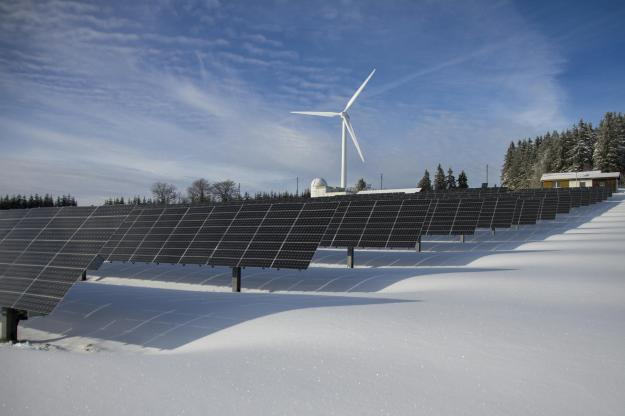

Earlysun Technology Precisely Solves HJT Mass Production Problems
Targeting the core advantage of "low-temperature manufacturing" of HJT batteries, Earlysun Technology developed HJT Low-Temperature Paste, which not only precisely matches low-temperature process requirements but also provides dual support in performance protection and cost control.
✅ Process and Performance Adaptation
No high-temperature sintering required; curing can be completed at lower temperatures. On one hand, this effectively avoids damage to HJT battery thin film layers and heterojunction interfaces caused by high temperatures, maximizing retention of the battery's native conversion efficiency; on the other hand, it significantly reduces equipment energy consumption, clearing key "process obstacles" for large-scale HJT battery production.
✅ Efficient Conduction and Cost Optimization
As the "core channel" for PV battery current collection, relying on component characteristics and formula optimization, while ensuring efficient current collection and reducing series resistance to maintain high battery performance, it can reasonably reduce silver paste usage, directly lowering precious metal costs in production, truly balancing the performance needs and economic demands of HJT batteries.
Photovoltaic Mission of Material Innovators: Assisting Global Energy Green Transition
Against the backdrop of deepening domestic substitution strategies for photovoltaics, autonomous control and technological breakthroughs in core materials have become the "cornerstone" of high-quality development in the PV industry. Through the development of HJT Low-Temperature Paste, Earlysun Technology has not only filled a technological gap in the field of high-efficiency PV materials but also reduced industry dependence on imported materials through "localized innovation."
Currently, the global green energy transition is accelerating. As one of the renewable energy sources with the most potential, the large-scale development of photovoltaics relies on continuous iteration of material technology.
Earlysun Technology's core PV materials release "Big Energy" industrial value through the innovative power of "Small Materials." We provide solid material support for achieving global "Carbon Neutrality" goals and building a clean, low-carbon energy system.